sunset, when the amber light slanted through the window and caught the fine dust dancing in the air. For Leslie, a ceramic and clay artist, the space was usually a sanctuary of creation. But today, the atmosphere felt sacred, almost heavy with history.
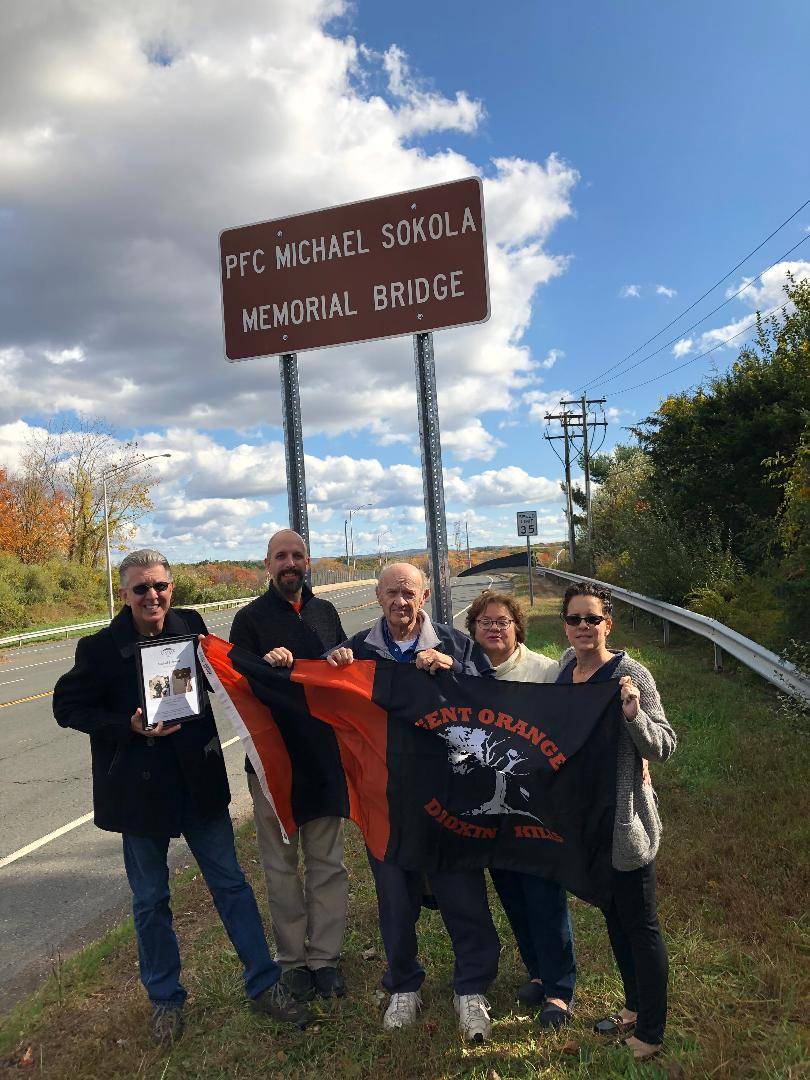
On the center of her workbench sat three blocks of unbaked polymer clay—vibrant crimson, stark white, and a deep, midnight blue. Next to them was a small, gold colored envelope containing a portion of the cremated remains of Private First Class Michael Sokola.
Michael had been a man who wore his love for his country not on his sleeve, but in the very fabric of his character. He had served during a time when the world felt fragile, stepping up as a young PFC because he believed in the promise of the flag. Decades after his service, even as age slowed his steps, his patriotism never wavered. He was the man who stood perfectly straight during the anthem at ballgames, who taught his nieces and nephews the proper way to fold a flag, and who believed that America wasn't just a place, but an ideal worth cherishing.
When he passed, his family didn't want him trapped in a dark urn on a dusty shelf. They wanted something that captured his spirit—something enduring, vibrant, and fiercely patriotic. They had brought him to Leslie.
Taking a deep, steadying breath, Leslie began the process. She sliced the red, white, and blue clay into precise geometric strips. Then, using a small sifter, she gently introduced a fine layer of PFC Michael’s ashes into the clay.
As her hands began to condition the clay, kneading the elements together, she felt a profound sense of responsibility. With every press of her palms, the physical remnants of PFC Michael Sokola became one with the colors RED WHITE AND BLUE he had loved so dearly.
She used a technique known as layering the colors strategically. She rolled out the deep blue, embedding tiny, brilliant white into the surface. Beside it, she laid out perfectly alternating ribbons of crimson and white. The process required immense patience; if she rushed, the colors would muddy into a dull purple. But Leslie worked with a disciplined focus, channeling the very order and respect that Michael had lived by.
Slowly, under the warmth of her hands, the individual strands began to create. The ashes didn't dull the clay; instead, they lent a subtle, textured depth to the colors—a marbled, ethereal quality that made the red look richer and the blue look as deep as an ocean.
Leslie artistically combined into the clay. The cross-section revealed a breathtaking, intricate pattern: a flawless, swirling American flag, tightly woven and inseparable from the ashes embedded within it.
From this beautiful mosaic, Leslie sculpted a veterans ring. A piece that honors his live his love for his country and bravery.
It was designed for his niece to carry, to always remind her how much she loved and was loved by her uncle Michael.
When the pieces emerged from the oven, cured and permanent, the transformation was complete. The polymer clay had hardened into a durable, vibrant tribute.
A week later, Michael’s family returned to the workshop. When Leslie placed the finished pieces into his family's hands, the room fell completely silent. The older woman ran her thumb over the smooth, swirling surface of the pendant. The red was bold, the white was pure, and the blue was steadfast—and locked safely inside that beautiful pattern was her loved one.
"He always said he had the red, white, and blue in his veins," his family whispered, a tear finally breaking free and slipping down her cheek. "Now, he is the flag."
PFC Michael Sokola had completed his final march. He was no longer a memory fading into the past; he was a tangible piece of art, forever wrapped in the colors of the country he loved, resting safely in the hands of the people who loved him.